“The Person Is Not Forced Into a Shape”
INterview with Detlev Diehm | 27.01.2026
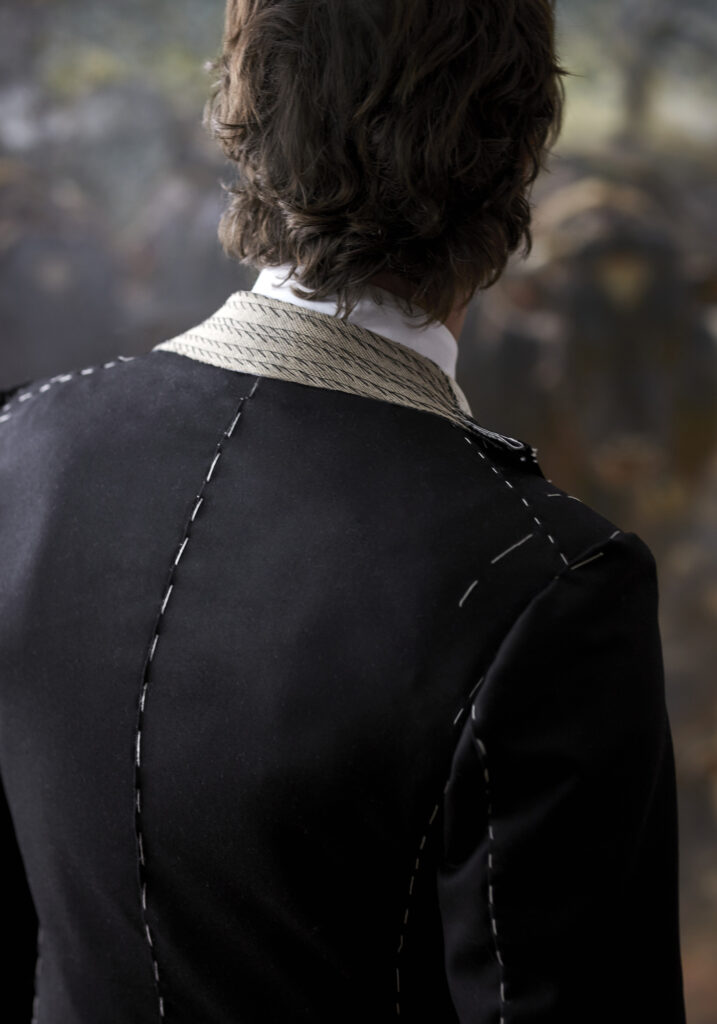
His designs have been worn by stars such as Michael Caine, Roger Moore, and Richard Gere. Today, the former creative director crafts an exclusive second skin in his own studio for anyone willing and able to invest in it. And it is no longer only James Bond–style gentlemen who appreciate Detlev Diehm’s suits.
From the legendary Parisian hotel Les Bains to Andreas Murkudis’ hip Berlin concept store, trained tailor and fashion design graduate Detlev Diehm is wherever his clients need him to be. When he is not working from his discreetly located Munich studio, he takes measurements at Reiser Manufaktur, a shirtmaker specializing in bespoke shirts. Together, they are able to offer an even broader range of services. Notably, women now account for around 30 percent of Diehm’s clientele – and the number is steadily rising. But what actually distinguishes a bespoke suit from high-end ready-to-wear? And what does “bespoke” truly mean? Detlev Diehm has the answers.
Mister Diehm, let’s be honest, isn’t a suit just a suit? What can a bespoke suit offer that a premium ready-made suit cannot?
Detlev Diehm: A truly outstanding bespoke suit merges with the wearer until the two become one. The body is not forced into a predetermined shape; instead, garment and person harmonize seamlessly. With ready-to-wear suits, it can sometimes feel as though the suit is dictating where the body should go. True quality reveals itself in a sense of ease and nonchalance combined with elegance. You can see when someone feels comfortable in their own skin – quite literally. This level of unity can only be achieved through bespoke tailoring.
What exactly is bespoke tailoring?
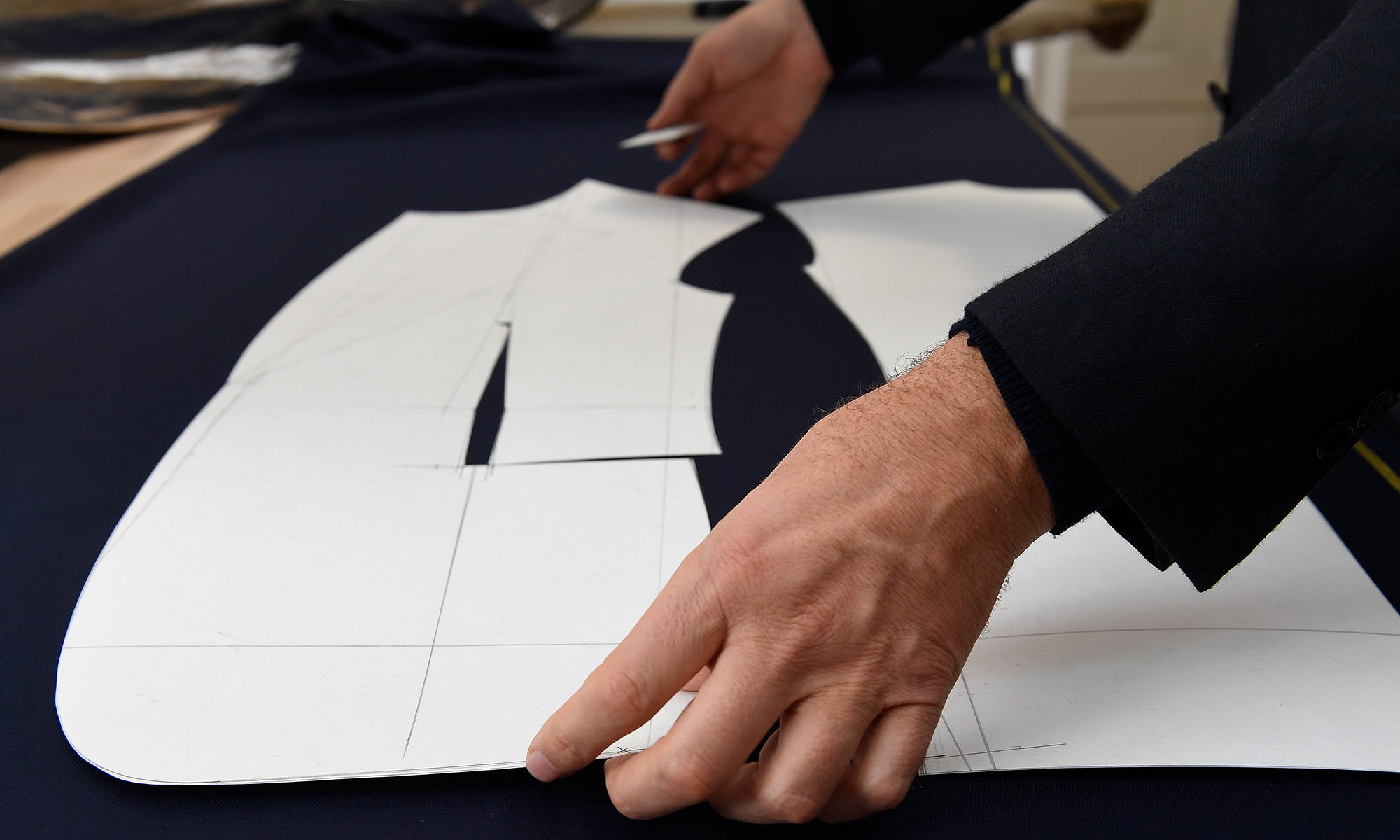
Detlev Diehm: We do not use any pre-made components. Everything begins with a blank sheet of paper and a conversation. Another defining characteristic of bespoke tailoring is that each garment is made from start to finish by a single craftsperson. One person may create several pieces – trousers, jacket, waistcoat, coat – but each individual item is completed by one person alone. Bespoke means clothing made by one individual for another individual.
That sounds like limitless possibilities. Is there nevertheless a typical Detlev Diehm suit? How would you describe your signature style?
Detlev Diehm: Light, fluid, and precise. I cannot pretend to be Neapolitan, nor did I grow up on London’s Savile Row. If you aim for the highest level, you must develop your own distinct style.
“This level of unity can only be achieved through bespoke tailoring.”
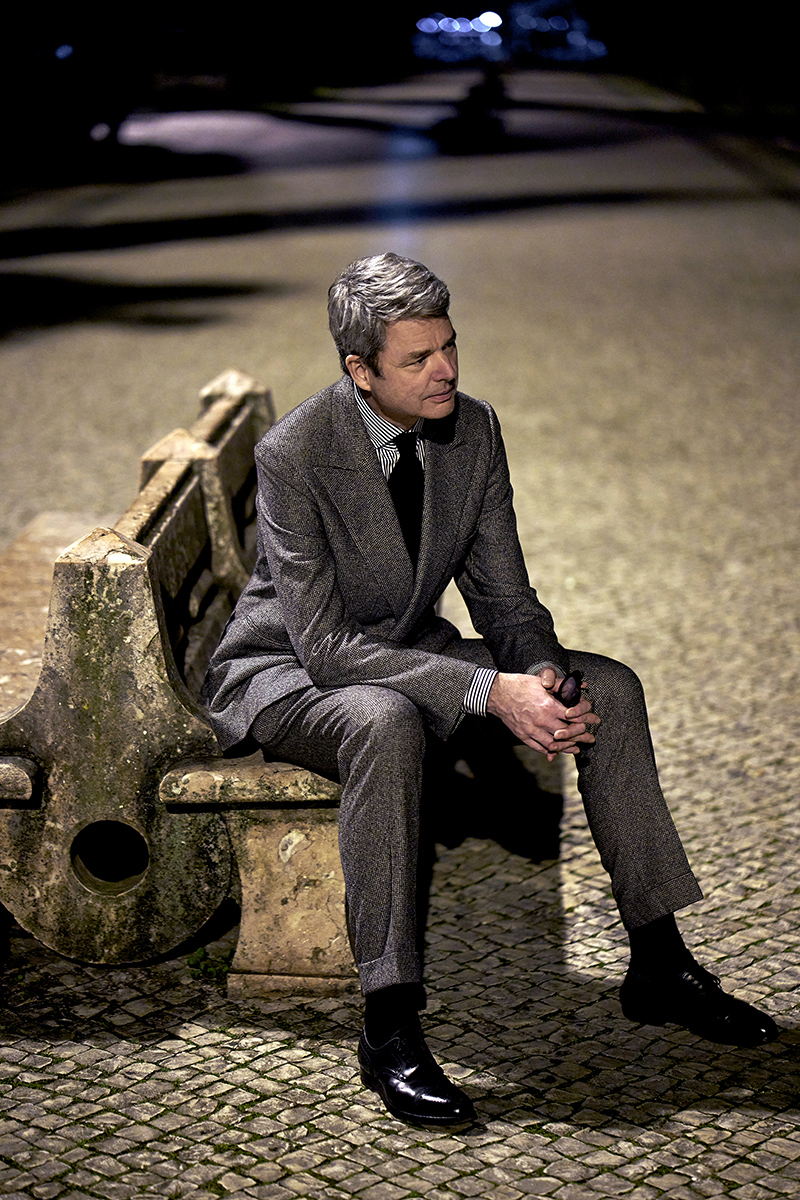
Is tailoring a profession or a calling for you?
Detlev Diehm: I arrived here partly by chance. Early on, I decided to study design in the broader sense, but first I wanted to learn a craft. I completed an apprenticeship in an excellent tailoring workshop and earned my master craftsman’s qualification. This was followed by a fashion design degree and many years working as a creative director in the European fashion industry. Tailoring, however, never truly let go of me. Nearly ten years ago, I finally became self-employed and opened my own tailoring studio in Munich.
When is a suit truly finished?
Detlev Diehm: When the client is standing at the door (smiles). You could always refine it further. The key is knowing when to stop.
With what feeling should clients leave your studio?
Detlev Diehm: My goal is for them to feel 100 per cent like themselves. Or even 110 per cent – as if they had discovered a slightly enhanced version of who they are: authentic and a little bit elevated.
Is there a particular suit you are especially proud of?
Detlev Diehm: There is always that moment when the garment and the person truly become one. In that moment, it is once again the best suit I have ever made. That feeling is what matters.
How much does one have to invest in a bespoke suit?
Detlev Diehm: A two-piece suit starts at around 5.000 Euros. Depending on the fabric, there is virtually no upper limit. Sometimes a basic choice is actually the best option – it travels well in a suitcase and does exactly what the client needs it to do. But if someone is seeking a true “wow” experience, a heightened sensuality of material, we are of course happy to make that happen.
“When you give your very best, satisfaction follows naturally.”
Is there a typical Detlev Diehm client?
Detlev Diehm: One thing they almost all share is that they do not need to wear suits for professional reasons. They could wear anything they like – and they consciously choose the suit.
Assuming I have no experience with bespoke tailoring at all: which suit would you recommend for first-time clients?
Detlev Diehm: Young men often come to us for the first time when they are getting married. Naturally, the occasion takes center stage. But around 90 percent of grooms want a suit they can continue to wear afterward. In such cases, a dark blue or light grey suit in an elegant yet durable fabric is a very safe choice.
Body shapes change over time. Are alterations possible later on?
Detlev Diehm: We can adjust a suit relatively easily by up to one and a half sizes – both in and out. I have even completely taken apart suits for clients who lost 25 kilograms and reconstructed them with a new cut. Perhaps the greatest sustainability factor of all: a bespoke suit is never thrown away. You dye it, you alter it – but you don’t discard it.
What does luxury mean to you personally?
Detlev Diehm: For me, material luxury lies in things that can be repaired – things that do not lose their value over time. Objects that resonate with me and that I can truly enjoy. It is a luxury to invest in craftsmanship and to realize a project together, from the initial idea to the finished product – whether that is a house, a piece of furniture, or a suit. To me, luxury stands in opposition to mindless consumerism.
How do you recharge your creative energy?
Detlev Diehm: Art in any form is incredibly stimulating. It activates certain areas of the brain and enables you to see and think beyond your own horizon. That, in turn, directly influences my designs. Elegant people, of course, are also a great source of inspiration.
Where do you encounter particularly many elegantly dressed people?
Detlev Diehm: In principle, everywhere. But in my view, this elegance is most concentrated in Milan. Milanese people approach clothing very creatively – witty, but never overly ostentatious.
What is absolutely essential in your work?
Detlev Diehm: Respect – for the client and for the craft itself. When you give your very best, satisfaction follows naturally. As in any craft practiced at a high level, the more you give, the more you receive in return. And that brings an enormous amount of joy.
You can reach OPMG by phone at +49 89 414243 99-0 or by email at office@opmgstaff.com.
OPMG serves leading personalities and companies, members of the aristocracy, icons from the worlds of sports and lifestyle, and world-class decision-makers. Based in Munich’s Old Town, our team operates internationally and across borders and is happy to assist you in any time zone.
Contact
Let’s start building connections
Looking after other people is in our genes.