“The power of observation is paramount”
INterview with Marcel Einfalt | 25.02.2026

A hand-kiss, a deep curtsy – and the social debut was complete. What were staples of European etiquette for centuries often feels outdated in most modern contexts. Have good manners become obsolete in the 21st century? Etiquette expert Marcel Einfalt knows: excellent manners are still very much in demand, and they involve far more than simply choosing the right fork.
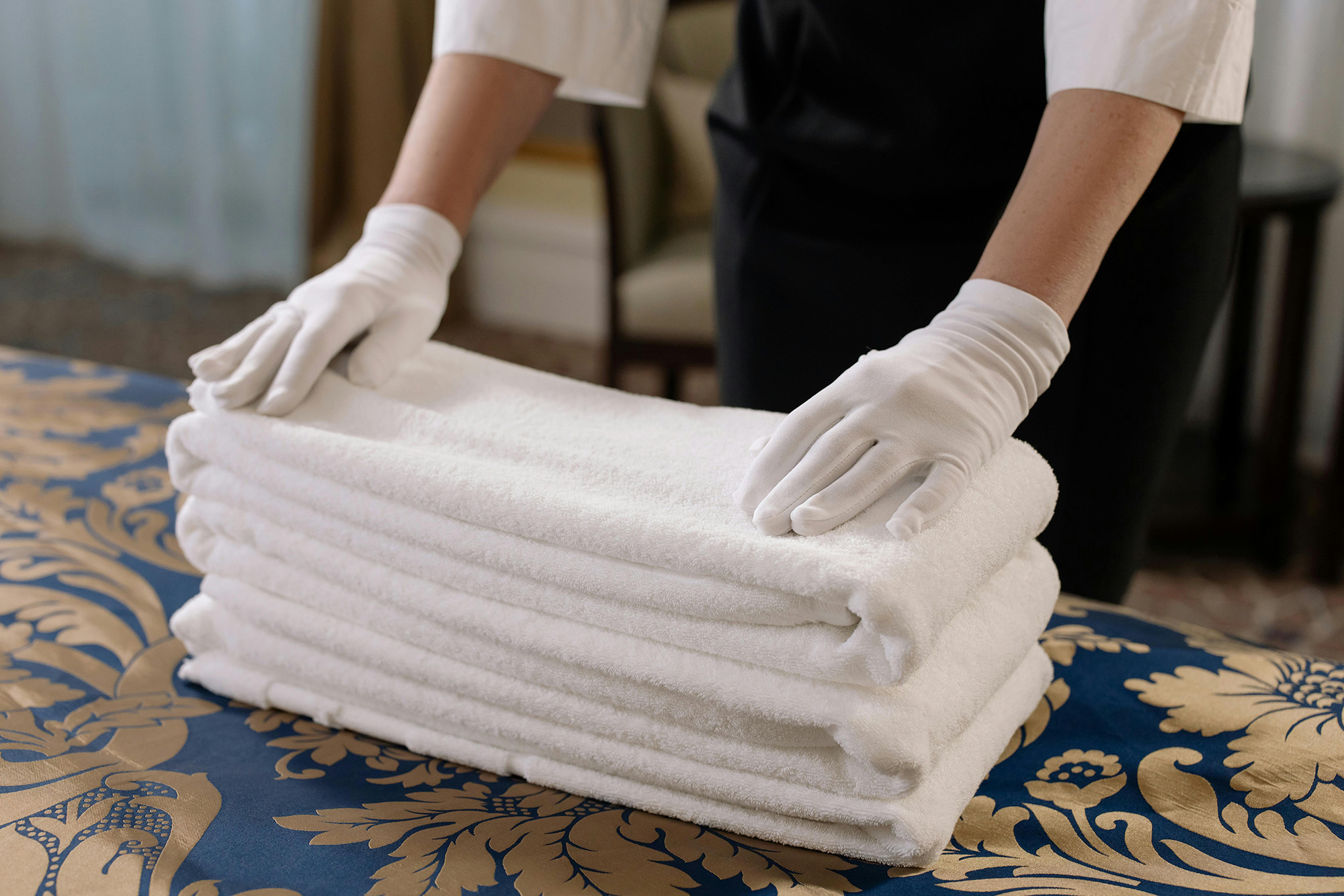
The chauffeur in white gloves and a peaked cap. The butler in a tailcoat. The housekeeper in a ruffled white apron. Uniforms that defined the daily rhythm of international households for generations have mostly been retired to the wardrobe these days. Even the children of the aristocracy no longer learn table manners and upright posture by balancing books on their heads. Yet, in the 21st century, good manners are anything but obsolete. Marcel Einfalt, COO of OPMG and a long-standing etiquette coach in international circles, offers insights into modern social graces. What role does the “art of anticipation” play? Why are Non-Disclosure Agreements (NDAs) necessary? And under what circumstances do “diamonds in the rough” have better career prospects than candidates with a flawless CV?
Mr. Einfalt, what role do classic etiquette rules still play in international private households today?
Marcel Einfalt: Etiquette is a topic that affects society as a whole – not just international private households. It isn’t primarily about using the correct cutlery. While that is a factor, it isn’t the deciding one. What is truly essential is the ability to practice restraint and make the other person the focus of attention. Especially from the employees’ perspective, there must be a willingness to remain in the background and react sensitively to the needs and signals of the employers and their guests. Above all, it’s about reading a situation correctly: When does someone want to be engaged in a conversation? And when is discretion required? This is an art that is in demand across all walks of life.
Does the introduction to this art typically begin in childhood?
Marcel Einfalt: Yes, the next generation is naturally prepared for these social standards. Many excellent schools provide young people with the necessary foundation. Balancing a book on one’s head is a rarity nowadays. As is often the case, children learn best by example. They are introduced to these topics quite naturally at a very young age. Beyond family, friends, and teachers, the role-model effect of the household staff also plays a significant part.
“Those who pay close attention to their counterpart and act with deliberation will avoid the faux pas.”

Are expectations in international private households explicitly discussed at the start of employment? Or is one simply expected to possess the necessary intuition?
Marcel Einfalt: The conduct of staff is a vital component of a household’s public image. Approaches vary significantly depending on whether a household is managed formally or informally. In formal settings – such as aristocratic households or diplomatic residences – strict rules and protocols govern all communication. These protocols precisely dictate who is authorized to provide personal service and how individuals should be addressed. Regardless of whether the environment is formal or informal, the key to success lies in meticulous preparation, or “mise en place”. By proactively addressing the specific preferences and expectations of the household, half the battle is already won.
Hierarchies, social graces, and dining etiquette often differ significantly from one culture to another. How do I avoid a culturally-driven faux pas on the international stage – for instance, at a state reception?
Marcel Einfalt: Here, too, preparation is a vital factor. Usually, the staff coordinates a protocol in advance, which serves as a blueprint for everyone involved on the day of the event. Ultimately, the power of observation is paramount: those who pay close attention to their counterpart and act with deliberation will avoid the faux pas.
Are there certain topics that are considered taboo?
Marcel Einfalt: When we are in service, topics like religion, politics, and illness have no place. For example, the health of one’s own pet should never become the focus of a conversation with a superior.
In general, how important is finding the right balance between proximity and distance?
Marcel Einfalt: Professional distance is critical for long-term success in a private household. Being friendly does not mean you are best friends. As an employee, you are a service provider operating within a hierarchy. Anyone who neglects their actual duties – such as a chef, for instance – to prioritize “socializing” will not last long in that position.
Speaking of socializing: what about confidentiality? In the age of social media and tabloids, it’s presumably a sensitive issue?
Marcel Einfalt: Discretion is essential in our line of work. Most candidates therefore sign strict confidentiality agreements – so-called NDAs (Non-Disclosure Agreements). Often, it is even a matter of security that no information regarding the location or habits of the employers reaches the outside world. The ban on gossip applies to the press, social media activities, and even the employee’s private circle – including spouses or partners.
“Attire on a superyacht looks quite different from what one would wear to a dinner for visiting dignitaries.”
In recruiting, is more value placed on professional qualifications or the candidate’s conduct?
Marcel Einfalt: Personality is essential. We conduct intensive interviews to get to know the person behind the CV, not just their technical competence. Hard skills can often be taught, but the personal attitude and mindset must fit the household from day one. We often encounter “diamonds in the rough” whose professional background might not be perfect, but whose character immediately wins over the employers.
One final question: Is the classic image of the butler in a tailcoat and white gloves now obsolete?
Marcel Einfalt: It may still be requested in some cases, but today, professional attire is no longer set in stone. Above all, what is required is the ability to adapt flexibly to the specific occasion. Attire on a superyacht looks quite different from what one would wear to a dinner for visiting dignitaries. The priority is an understated, elegant, and functional presence. It should remain clear who is the guest or employer and who is staff.
You can reach OPMG by phone at +49 89 414243 99-0 or by email at office@opmgstaff.com.
OPMG serves leading personalities and companies, members of the aristocracy, icons from the worlds of sports and lifestyle, and world-class decision-makers. Based in Munich’s Old Town, our team operates internationally and across borders and is happy to assist you in any time zone.
Contact
Let’s start building connections
Looking after other people is in our genes.